Powering a Federal University: Solar Hybrid Generation at Michael Okpara University, Abia State
1The Programme This Sits Within
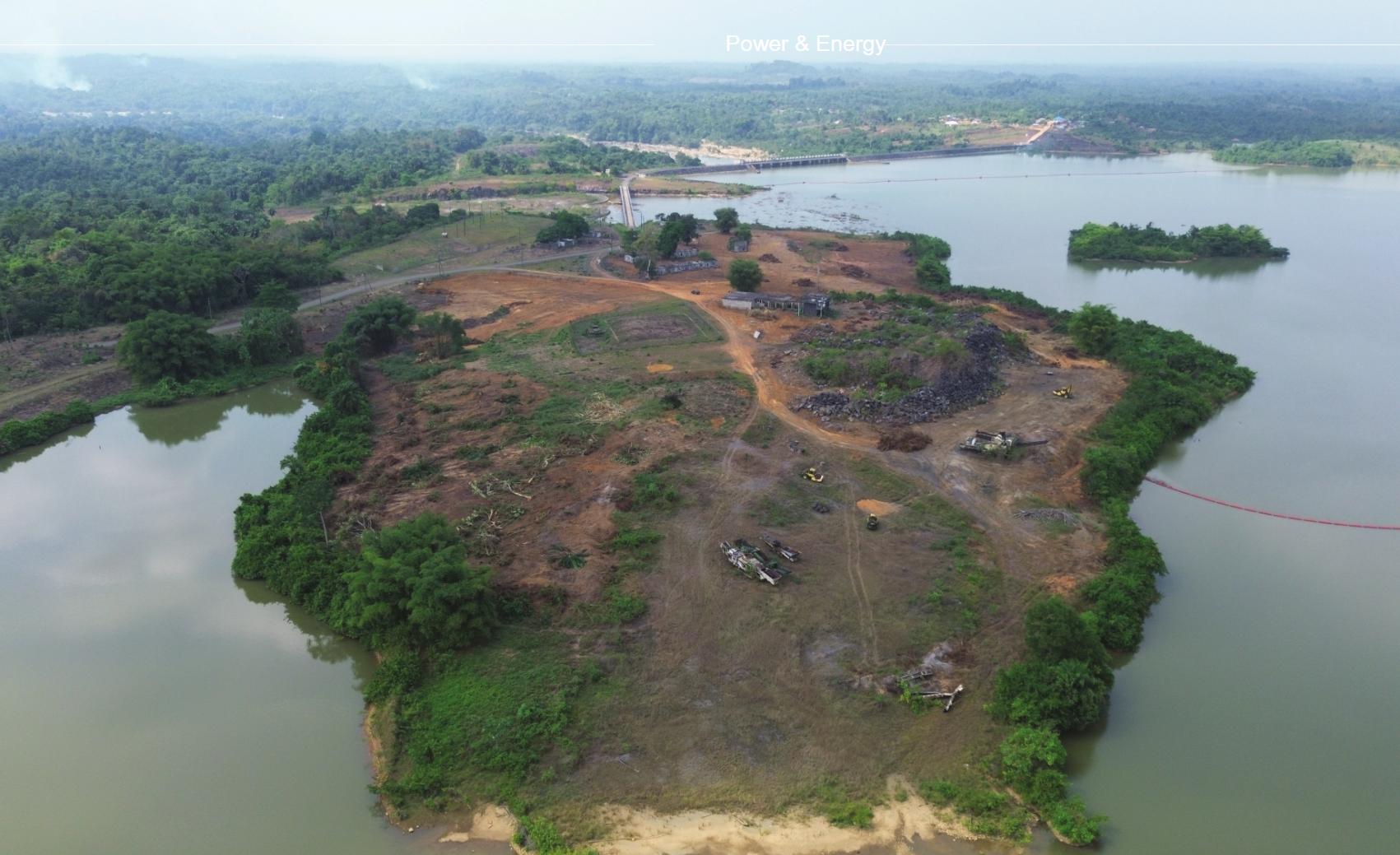
The Energizing Education Programme is a Federal Government of Nigeria initiative implemented by the Rural Electrification Agency, established to supply clean and reliable power to 37 federal universities and 7 affiliated university teaching hospitals across the country. Each installation comprises a dedicated independent power plant, rehabilitation of existing campus distribution infrastructure, street lighting for campus security, and a Renewable Energy Workshop and Training Centre.
The programme runs in three phases:
- Phase I — financed by the Federal Government;
- Phase II — financed by the World Bank, covering seven universities and two teaching hospitals;
- Phase III — financed by the African Development Bank, covering eight universities and one teaching hospital.
This contract falls under Phase II.

2Scope Delivered
| Component | Specification |
|---|---|
| Solar generation | Solar photovoltaic generation systems, 2 MW generating capacity |
| Balance of system | Mounting structures, PV modules, inverters, combiner boxes, electrical cabling and associated equipment |
| Hybrid system | Power conversion and energy management systems |
| Electrical infrastructure | Transformers, switchgear, protection systems and electrical distribution infrastructure |
| Grid interface | Grid interconnection facilities and synchronisation with the existing electrical network |
| Control | Monitoring, automation and control systems including SCADA for real-time supervision |
| Metering | Metering, communication and data acquisition systems |
| Civil works | Associated civil and ancillary facilities including workshop and training buildings for operation, maintenance, storage and capacity-building |
| Safety systems | Earthing, lightning protection and safety systems |
| Commissioning | Functional testing, system integration testing, performance verification, energization and operational validation |
| Documentation | As-built drawings, operation manuals and technical documentation |
| Capacity building | Training of Employer personnel for operation and maintenance |
| Operations | Operation and maintenance services per contract requirements, and final handover |

3Execution Record
| Milestone | Detail |
|---|---|
| Contract awarded | 9 September 2022 |
| Construction period | 12 months |
| Operation and maintenance period | 12 months |
| Defects liability period | 12 months |
| Final Completion certified | 15 September 2025 |
The certificate confirms that the works reached Final Completion, that performance and operational requirements were achieved, and that the project was formally handed over for operation and use.
4Political Context and Significance
This section describes the policy environment surrounding the project. It is written to be factual rather than partisan.
University power supply is a federal policy commitment, not a discretionary upgrade
The Energizing Education Programme exists because the electricity supply to Nigerian federal universities became a recognised constraint on the national higher-education system. Institutions were diverting operating budgets into diesel, and laboratory work, teaching hours and residential campus life were being determined by grid availability. Establishing a dedicated federal programme across 37 universities converted that from an institutional problem into a federal obligation with a delivery mechanism attached.
Geographic distribution across the federation is a structural feature of the programme
EEP was designed to reach federal universities across all geopolitical zones. In a country where the regional allocation of federal capital spending is a persistent subject of public debate, a programme whose beneficiary list is fixed by the location of federal institutions distributes investment on an institutional rather than a discretionary basis. A completed Phase II installation in Abia State is a data point in that debate irrespective of the intention behind it.
The choice of institution carries policy content
Michael Okpara University of Agriculture is a specialised agricultural university. Reliable power at an agricultural research institution supports cold chain, laboratory refrigeration, controlled-environment work and processing equipment — the infrastructure on which agricultural research output actually depends. Where electrification investment lands within the university system therefore shapes which fields of national research capacity are strengthened.
Multilateral financing brings its own governance requirements
Phase II is World Bank-financed. That places the contract inside an international procurement and reporting framework, with the compliance and disclosure obligations attached — a different accountability environment from purely domestically-funded public works, and one relevant to how the project’s execution can be evidenced.
Commissioned across the devolution transition
The contract ran from September 2022 to September 2025. Within that period, the Fifth Alteration to the Constitution (17 March 2023) moved the national grid system to the Concurrent Legislative List, and the Electricity Act 2023 (10 June 2023) established the framework for state electricity markets. Campus systems designed to operate independently of the grid occupy a particular position in that settlement: they reduce an institution’s exposure to whichever regulatory and tariff regime ultimately prevails.
The regulatory settlement remains contested
A proposed Electricity Act (Amendment) Bill before the National Assembly has drawn objection from state electricity regulators, who characterise it as recovering powers already devolved, while legislators argue it prevents fragmentation of the national market. The federal–state boundary in Nigerian electricity is unsettled, and investors should read any Nigerian generation asset against that uncertainty.

Project Enquiries
International Consolidated Contractors Offshore SAL Ltd · 04 Oguda Close, Maitama, Abuja, Nigeria
Email: info@i-cc.co · Website: www.i-cc.co · Tel: +961 21 614100


Comments
Post a Comment